The experiment
One anthill, one feeding a day, one reel a day. The protocol as far as anyone outside can tell, and what it cannot tell us.
Who
The creator posts as @rich_anthill, under the name Ant Life Improvement Service. The first reel went up on 14 Oct 2026. The account describes itself as “an everyday series about ants”.
ConfirmedThis website is an independent concept built around that series. The creator did not make, commission or review it.
What goes in
On Day 1 the creator promises the colony sugar every day. On Day 3 the creator brings whey protein. Nobody has yet checked the reels for exact words, amounts or what Day 2 contained.
Reported, not yet confirmedQuantity, form (dry or dissolved), time of day and whether leftovers are removed are all not yet known.
How it is recorded
One short vertical video a day, posted to Instagram with a day number. There are no counts, weights or fixed camera positions on record. The log records each reel and leaves observation fields empty until someone watches and writes them up.
Where
Outdoors, at one wild colony. This site will never publish the place, the region or anything that could lead someone to the nest.
Looking after the colony
Lab studies found that a high-protein, low-carbohydrate diet shortened worker lives in black garden antsWorkers on high-protein, low-carbohydrate diets lived far shorter lives, driven by the protein itself. A single day on such a diet harmed workers and colony size.Limits: Queenless laboratory colonies of 200 workers on synthetic diets.Dussutour A, Simpson SJ (2012). Ant workers die young and colonies collapse when fed a high-protein diet. Proceedings of the Royal Society B 279(1737): 2402–2408. doi:10.1098/rspb.2012.0051, and that larvae reduce that costA few workers collect food for everyone; workers burn carbohydrate and larvae consume protein. Foragers kept carbohydrate and ejected protein. Processing excess protein shortened their lives, far less so when larvae were present.Dussutour A, Simpson SJ (2009). Communal nutrition in ants. Current Biology 19(9): 740–744. doi:10.1016/j.cub.2009.03.015. A wild colony has other food and may cope differently. Still, this site suggests:
- Keep each day's amount small and the same.
- Clear leftovers so the drop does not draw pests or spoil.
- Watch for fewer ants, dead workers near the drop, or mould, and stop if they appear.
- Avoid salt, sweeteners and anything a person would not eat.
These are suggestions from this site, not a description of what the creator does.
What it cannot show
One colony cannot speak for ants. One camera sees the surface, not the nest. A change on one day might come from the food, the weather, a rival colony or chance. Without counts, nobody can say the colony grew or shrank.
Footage still needed
No creator footage appears on this site yet. Each of these shots would replace a stand-in or fill a gap.
- 01A fixed tripod frame of the feeding spot: same framing, same time each day, a ruler or coin in shot.Makes days comparable. Becomes the opening shot and the evidence frame on every day page. Replaces the stand-in “crumb”.
- 02A close shot of the first ants reaching the food.Shows discovery and recruitment, the first science beat. Replaces the stand-in “scout”.
- 03Two to five unbroken minutes of the path between nest and food.Shows whether a trail forms or strengthens over the days. Replaces the stand-in “twig”.
- 04A close shot of ants feeding and meeting at the food.Possible mouth-to-mouth sharing. Labelled 'possible' unless it is clear. Replaces the stand-in “handling”.
- 05A wide shot of the habitat with no landmarks, street signs or buildings.Introduces the colony without giving away the location. Replaces the stand-in “mound”.
- 06The packaging or a weighed portion of each day's food.Moves 'Given' from reported to confirmed.
- 07The spot one to two hours after feeding.Records leftovers and whether they were cleared.
Stand-ins on this site
Every photograph here shows other ants in other places, and says so on the frame. None has a confirmed source or licence yet.
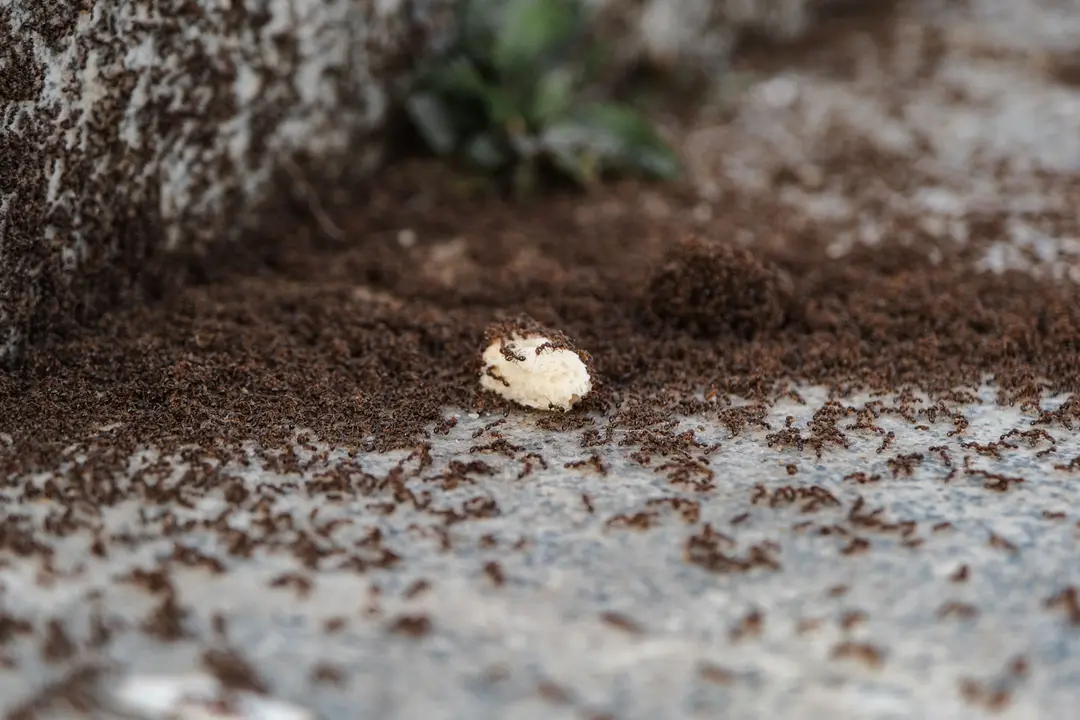
crumb
Hundreds of small dark ants spread across bare stone around a single white crumb.
Homepage, the opening descent · Licence: unconfirmed
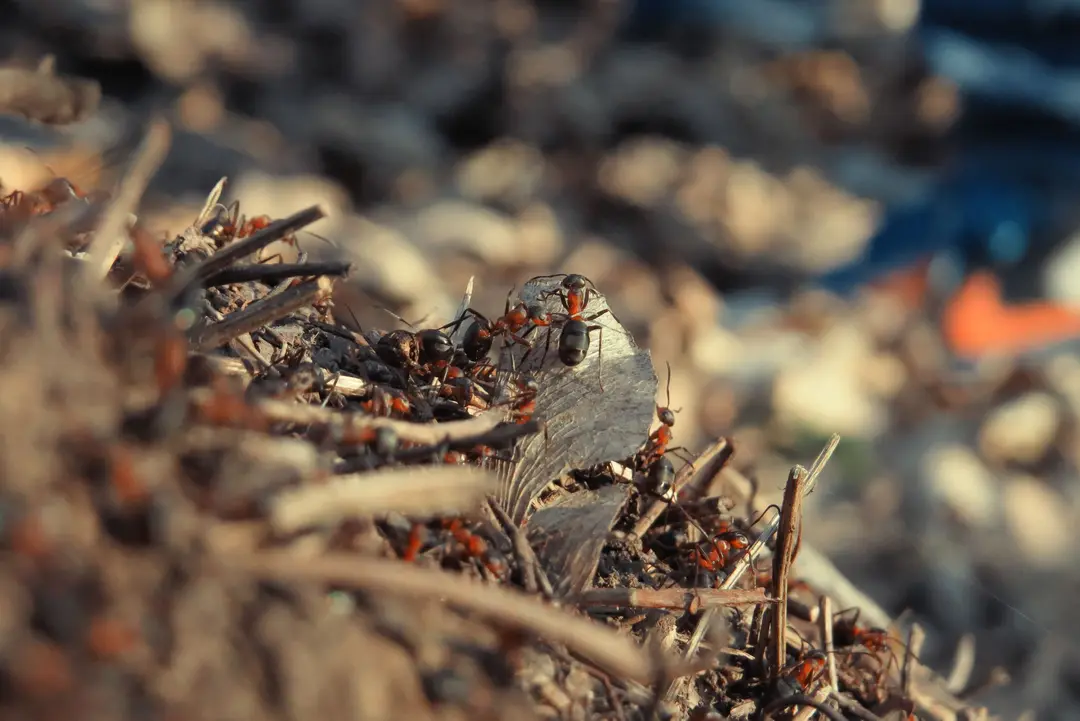
mound
Reddish ants swarming over a mound of pine needles and plant debris.
Homepage, the colony · Licence: unconfirmed
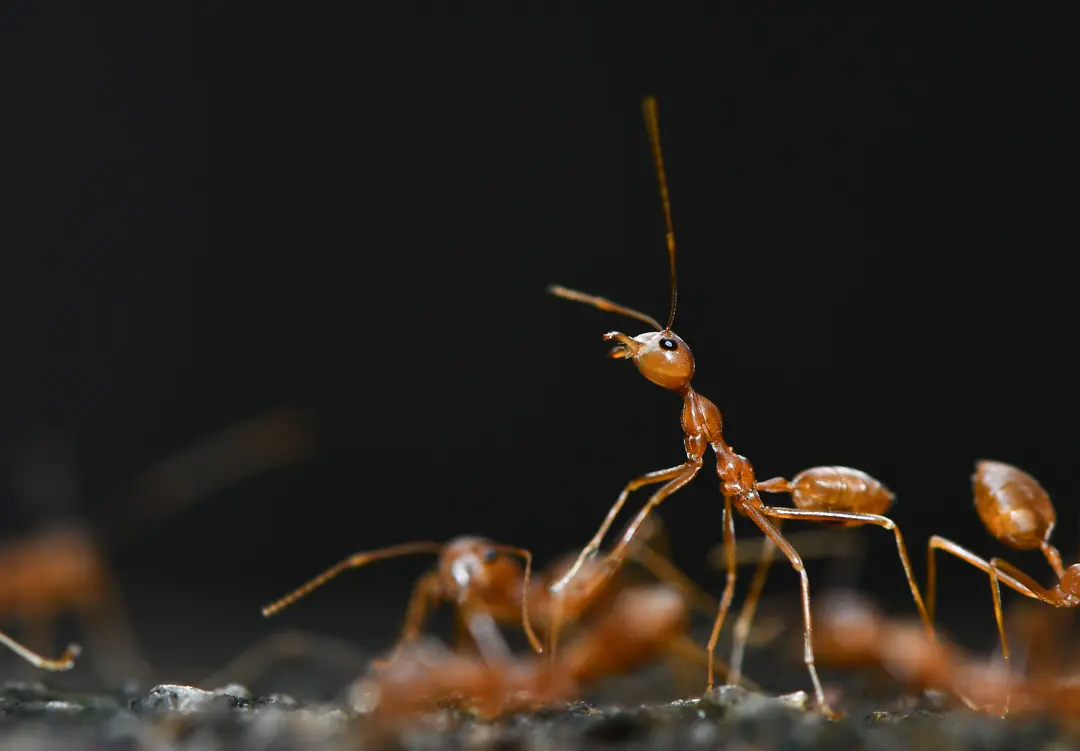
scout
A long-legged orange ant standing tall with its antennae raised, others blurred behind it.
Homepage, a scout finds it · Licence: unconfirmed
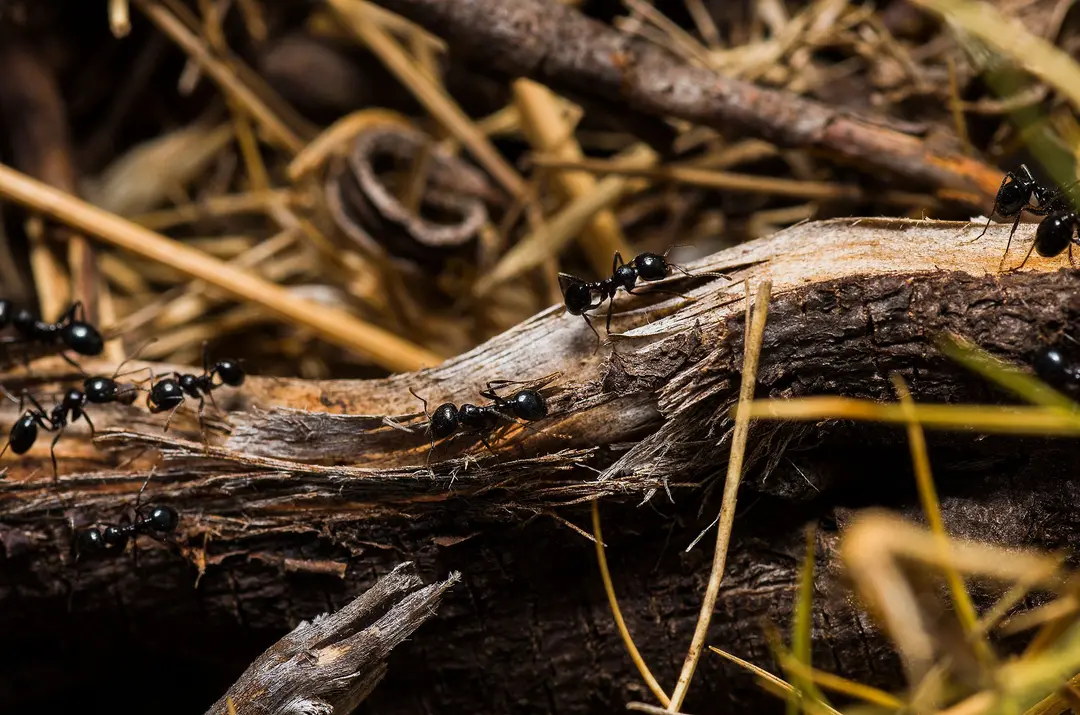
twig
Black ants in a loose line along a dry twig through straw.
Homepage, out of sight · Licence: unconfirmed
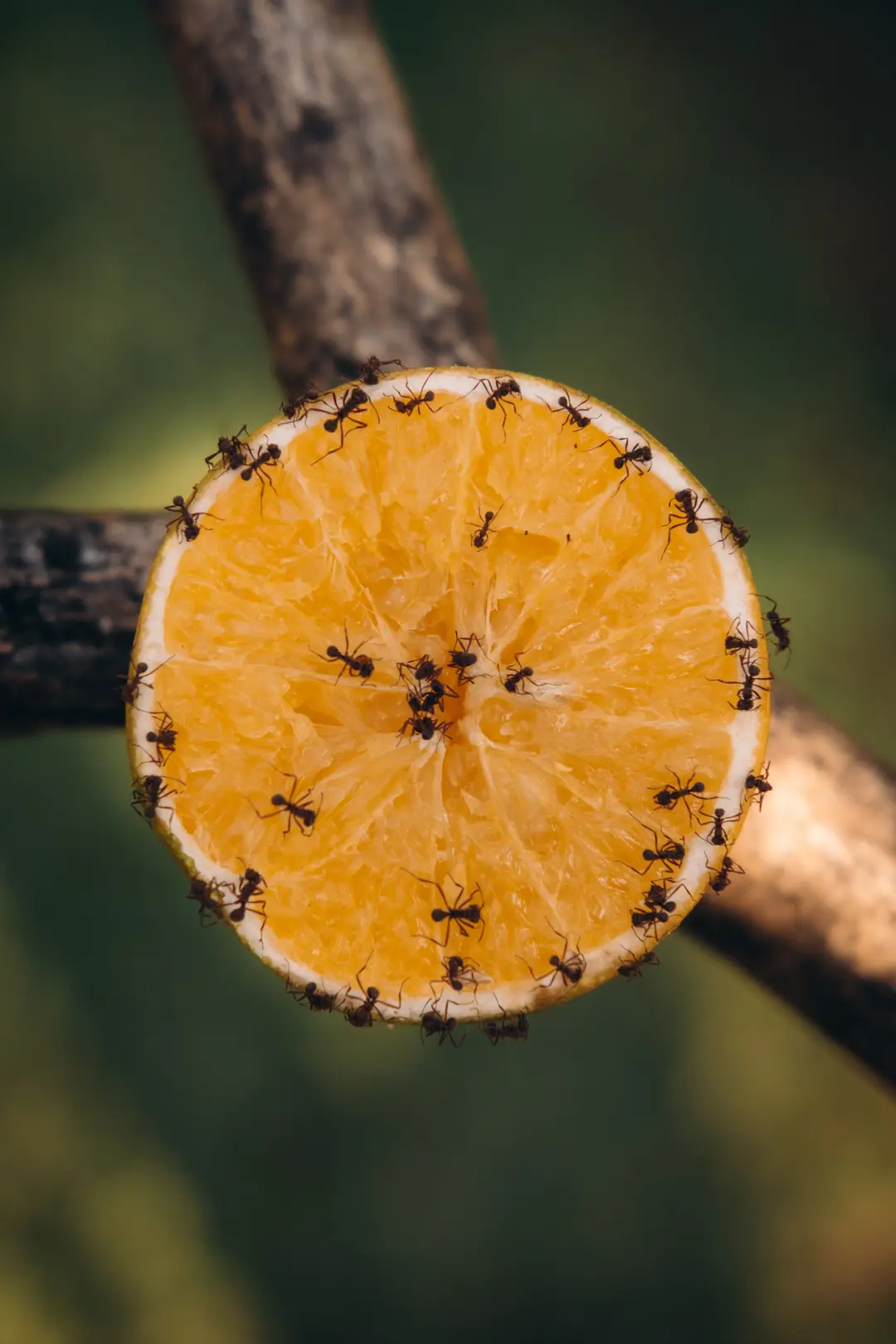
orange
Dozens of black ants spread over the cut face of an orange slice.
Homepage, the trail decides the effort · Licence: unconfirmed
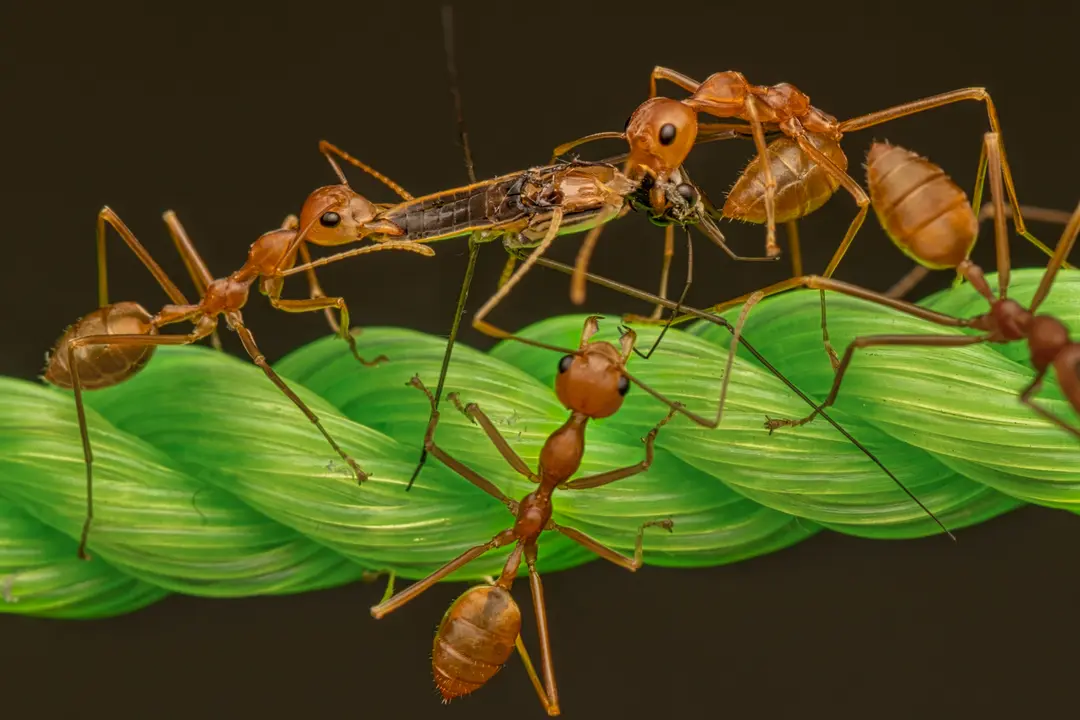
handling
Several orange ants on a green rope pulling at the body of a small insect between them.
Homepage, food travels mouth to mouth · Licence: unconfirmed
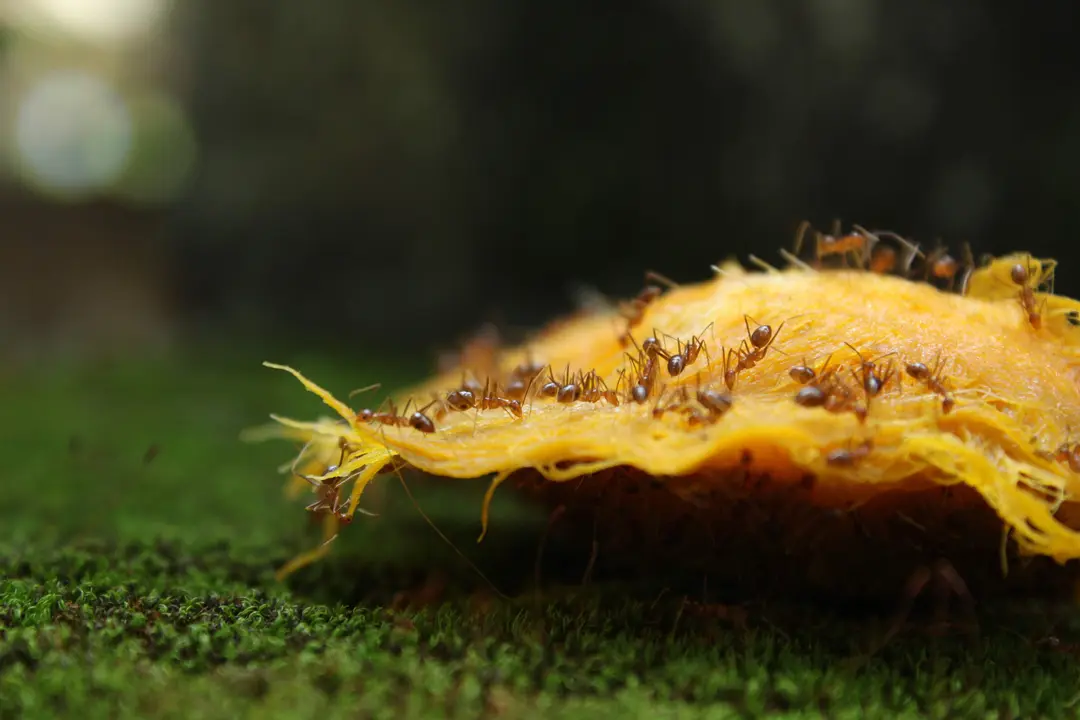
pulp
Small orange ants crowded along the fibrous edge of a piece of fruit on green ground.
Homepage, workers burn sugar · Licence: unconfirmed
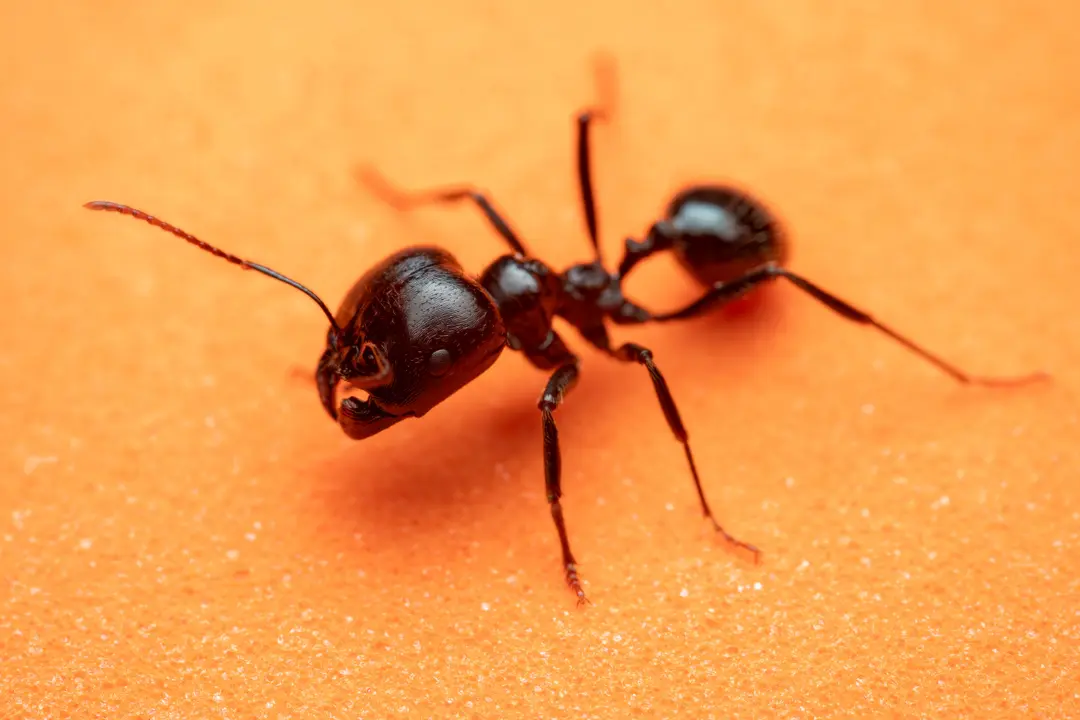
worker
A single glossy dark-red ant walking across an orange surface.
The experiment, closing frame · Licence: unconfirmed
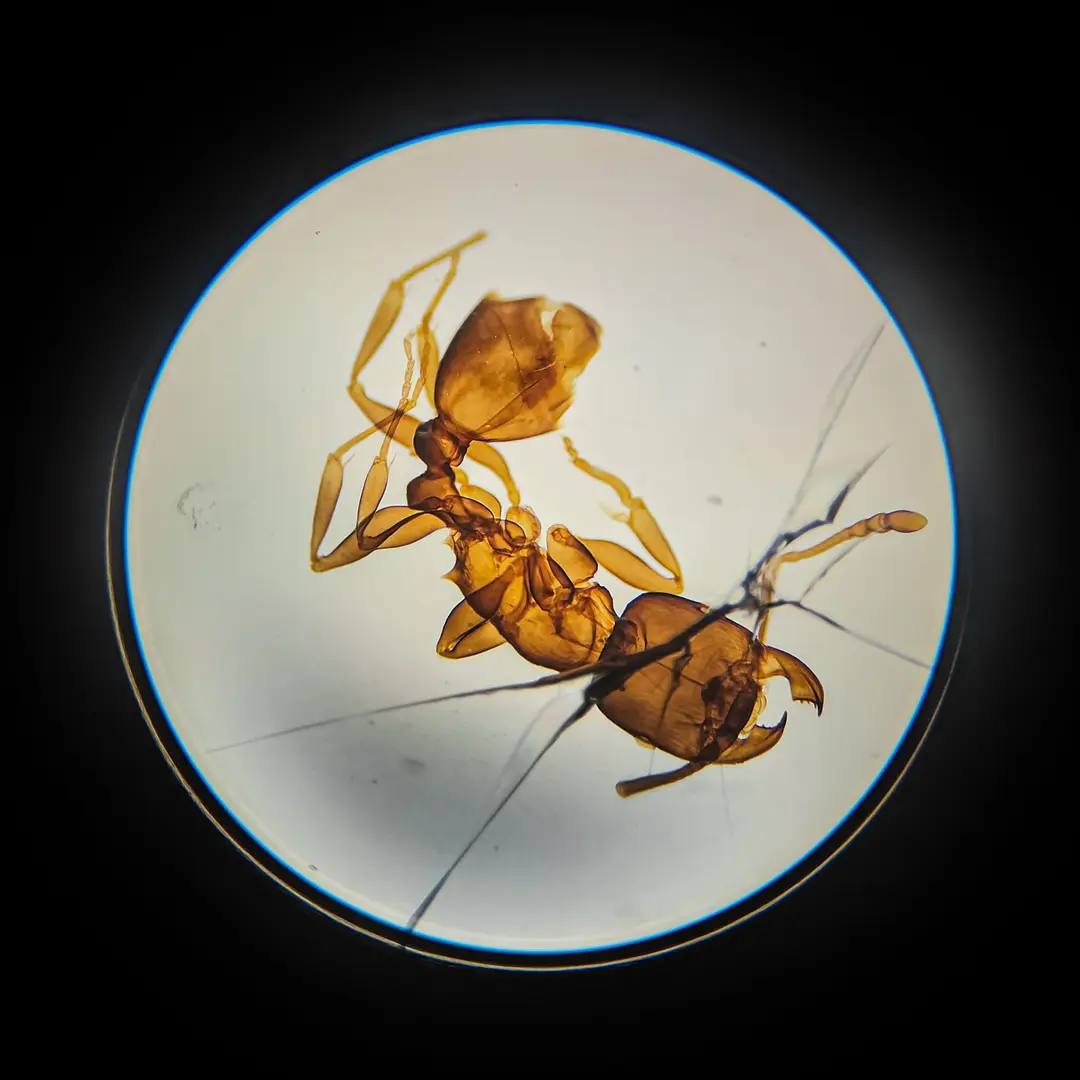
specimen
A cleared, amber-coloured ant specimen seen through a microscope eyepiece.
Science, header · Licence: unconfirmed
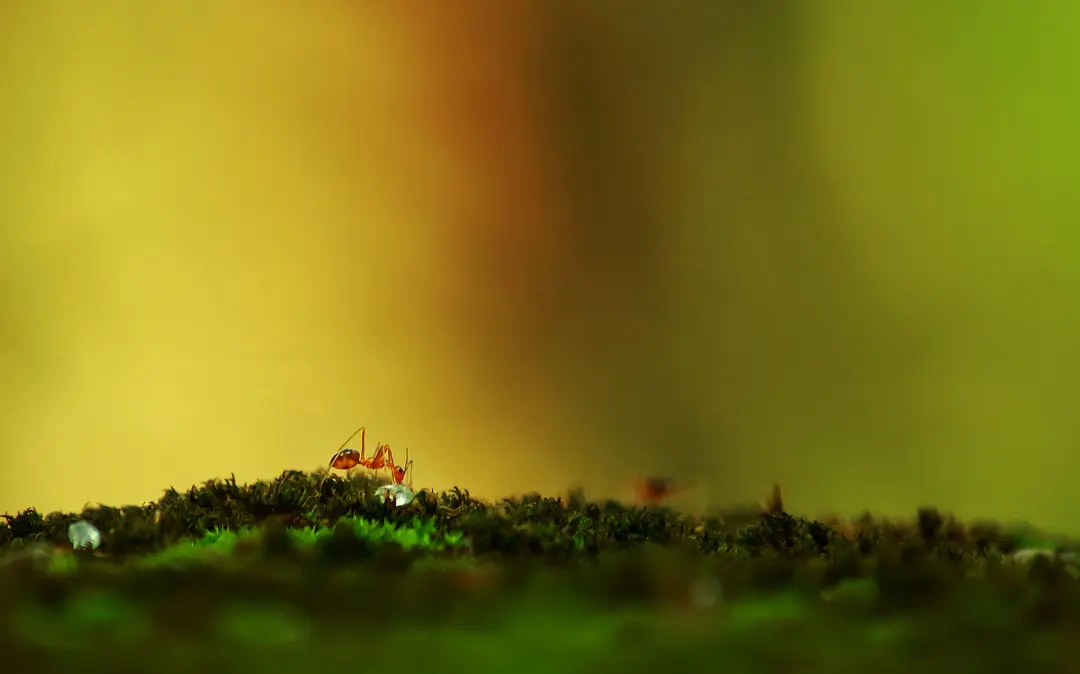
moss
A single ant standing on a low ridge of moss beside a water droplet.
Science, what the experiment measures; homepage, the close · Licence: unconfirmed


To replace one: drop the new file in assets/, point its entry in content/media.ts at it, set its role, credit and licence, and run pnpm photos.
